Carbide vs Ceramic Slitting Blades: Which Is Best for Your Converting Operation?
In high‑speed converting and film slitting operations, blade performance directly affects production efficiency, product quality, and operating costs. One of the most common questions manufacturers ask is whether carbide or ceramic blades are the better choice for their cutting process.
Both materials offer excellent durability and precision, but they perform differently depending on the material being cut, machine speeds, and production conditions. Understanding these differences helps manufacturers reduce downtime, improve cut quality, and extend blade life.
With more than 50 years of experience providing industrial razor blades and converting solutions, Hardedge Tool works with manufacturers across the United States to help them select the best blade for their specific applications.
Understanding Slitting Blade Materials
Slitting blades are designed to maintain a sharp edge while operating at high speeds and under continuous production conditions. The two most common high‑performance materials used in industrial razor blades are tungsten carbide and ceramic zirconia.
Each material offers distinct advantages depending on the cutting environment.
What Are Tungsten Carbide Slitting Blades?
Tungsten carbide blades are widely used in industrial cutting applications due to their exceptional hardness and wear resistance. Carbide blades are made by combining tungsten with carbon to form an extremely durable compound capable of maintaining sharpness even in demanding production environments.
Carbide slitting blades are often used in:
• Plastic film converting
• Flexible packaging manufacturing
• Foil processing
• Paper and label production
• Fiber and textile cutting
Hardedge Tool offers several carbide blade options designed for precision slitting, including the Carbide 3‑Hole Razor Slitter and the Solid Tungsten Carbide Slotted Slitter Blade.
Benefits of carbide slitting blades include:
• Exceptional wear resistance
• Long blade life in high‑volume production
• Consistent cutting performance
• Reduced blade replacement frequency
• Excellent edge retention
These characteristics make carbide blades ideal for facilities running continuous converting operations where minimizing downtime is critical.
What Are Ceramic Slitting Blades?
Ceramic blades are manufactured using advanced zirconia materials that are extremely hard and resistant to corrosion. These blades are especially effective when cutting abrasive or chemically sensitive materials.
Hardedge Tool provides precision ceramic options such as the Solid Ceramic Zirconia Slotted Slitter Blade, which delivers excellent cutting performance for specific industrial applications.
Advantages of ceramic slitting blades include:
• Extreme hardness and edge sharpness
• Corrosion resistance in harsh environments
• Minimal friction during cutting
• Excellent performance with abrasive materials
• Reduced heat generation during high‑speed slitting
Because ceramic blades do not oxidize or corrode easily, they can perform exceptionally well in environments where traditional steel or carbide blades may degrade.
Key Differences Between Carbide and Ceramic Blades
Durability
Both carbide and ceramic blades are extremely durable, but they perform differently under certain conditions. Carbide tends to be slightly tougher and more resistant to chipping, making it suitable for a wider range of applications.
Ceramic blades are harder but can be more brittle if subjected to improper handling or machine vibration.
Material Compatibility
Carbide blades perform well across a broad range of materials including plastics, laminates, films, and paper.
Ceramic blades often excel when cutting abrasive materials or applications where chemical resistance is important.
Edge Longevity
Both materials maintain sharp cutting edges longer than standard steel blades. However, ceramic blades often provide extremely fine edge sharpness, which can improve cut quality for certain thin materials.
Cost Considerations
While both blade types are premium options, their extended lifespan and reduced replacement frequency often lower overall operating costs compared to standard blades.
Choosing the Right Blade for Your Operation
Selecting the correct blade material depends on several production factors.
Manufacturers should consider:
• Type of material being slit
• Thickness and abrasiveness of the material
• Production speed and line tension
• Desired blade lifespan
• Machine configuration and blade holder type
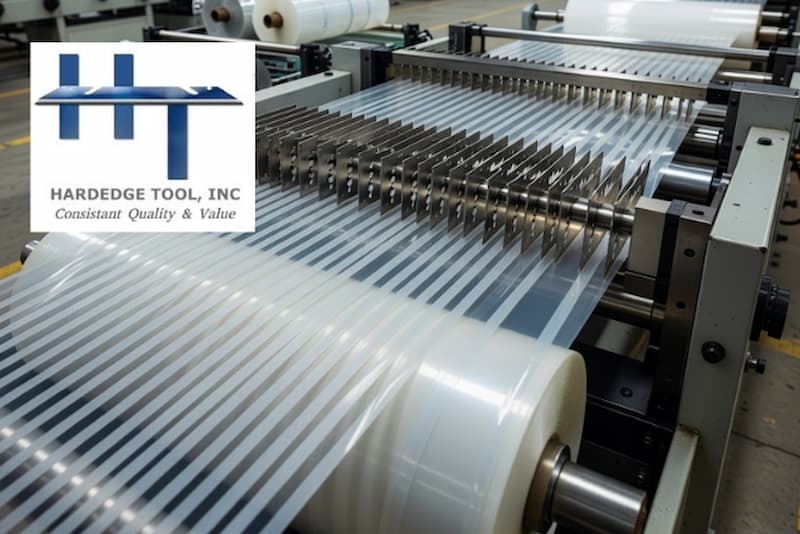
For example, operations running continuous high‑speed film slitting may benefit from tungsten carbide blades because of their durability and resistance to edge wear.
Meanwhile, specialized materials or abrasive coatings may perform better with ceramic zirconia blades.
Working with an experienced blade supplier ensures that these factors are properly evaluated before selecting a solution.
Hardedge Tool Blade Solutions
Hardedge Tool offers a wide range of high‑performance blades designed for precision converting applications.
Popular blade options include:
HT HSS‑10 High-Speed Steel Slotted Razor
A durable and versatile blade used in many film converting operations.
Titanium Carbide SS 3‑Hole Razor Blade
A ceramic-coated stainless steel blade designed to improve wear resistance and reduce friction during cutting.
Carbide 3‑Hole Razor Slitter
A long‑lasting solution for high‑volume production environments.
Solid Tungsten Carbide Slotted Slitter Blade
Ideal for demanding industrial cutting operations requiring maximum durability.
Solid Ceramic Zirconia Slotted Slitter Blade
A specialized blade designed for abrasive materials and corrosion‑sensitive environments.
Learn more about Hardedge Tool’s razor slitting solutions at
https://hardedgetool.com/razor-slitting/
According to industry research from the Flexible Packaging Association, improving slitting accuracy and blade performance is one of the most effective ways to reduce material waste and increase production efficiency in converting operations.
FAQ
Which blade lasts longer: carbide or ceramic?
Both materials provide excellent lifespan compared to standard steel blades. Carbide blades are generally more durable across a wider range of applications, while ceramic blades can maintain extremely sharp edges in specialized environments.
Are ceramic blades better for film slitting?
Ceramic blades can perform very well with thin films or abrasive materials, but carbide blades are often preferred for general film converting due to their durability and resistance to chipping.
Do carbide blades require more maintenance?
No. Carbide blades typically require less frequent replacement and maintain their cutting edge longer than many other blade materials.
Can these blades be reconditioned?
Many industrial blades can be sharpened or reconditioned multiple times, helping extend their lifespan and reduce costs.
How do I know which blade is best for my production line?
The best approach is to evaluate your material type, machine configuration, and production speed. Hardedge Tool specialists can help identify the most effective blade for your specific application.
Carbide vs Ceramic Slitting Blades: Which Is Best for Your Converting Operation?
Both carbide and ceramic slitting blades offer powerful advantages for modern converting operations. Choosing the right material can significantly improve cutting precision, reduce downtime, and increase overall production efficiency.
With more than five decades of expertise in industrial cutting solutions, Hardedge Tool helps manufacturers across the United States select the right blade technology for their operations.
If you are looking to improve your slitting performance or need help choosing between carbide and ceramic blades, contact Hardedge Tool at 859‑581‑0770 or visit https://hardedgetool.com/ to request expert guidance and a quote.
Blog by Foster Group