How the Right Choice of Film Slitting Blades Impacts Quality, Waste, and Throughput
In film converting, every cut matters. A single imperfection—whether it’s edge fray, material stretch, or inconsistent width—can ripple through the entire production process, leading to waste, downtime, and unhappy customers.
At the center of it all is a deceptively simple component: the film slitting blade.
While often overlooked, the type, material, and configuration of your slitting blades can make or break your operation’s efficiency. With over 50 years of experience, Hardedge Tool has helped companies across film, foil, and flexible packaging industries refine their cutting processes for maximum performance.
Let’s break down what separates average slitting performance from exceptional results—and how to get there.
What Makes Film Slitting So Demanding?
Film materials are uniquely challenging. Unlike rigid substrates, they are flexible, thin, and sensitive to tension, heat, and friction.
This creates several cutting challenges:
- Maintaining clean edges without tearing or distortion
- Preventing buildup on blade edges
- Managing heat at high speeds
- Achieving consistent cuts across long production runs
Because of these factors, film slitting requires not just sharp blades—but the right blades.
Razor Slitting vs. Other Methods
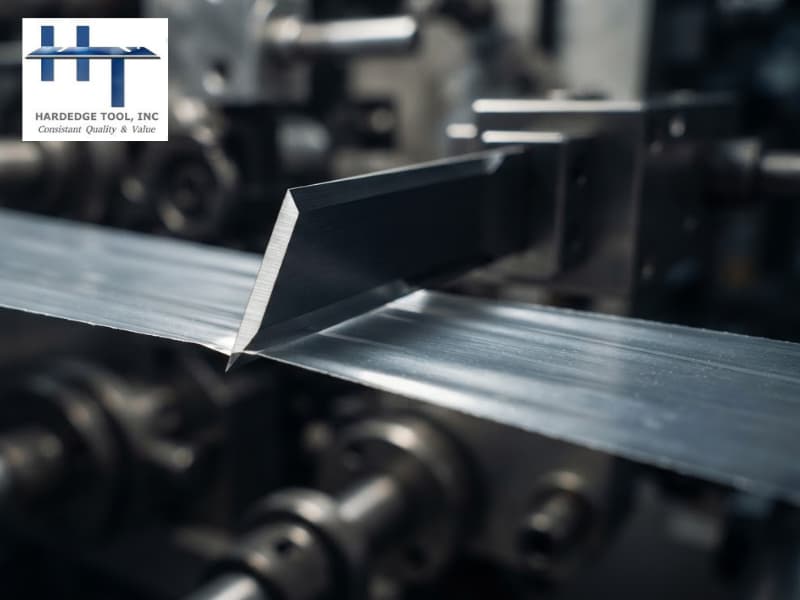
Razor slitting is one of the most widely used methods in film converting due to its simplicity and precision. It involves passing the material across a stationary or rotating razor blade to achieve a clean cut.
Compared to shear or score cutting, razor slitting offers:
- Lower setup complexity
- Reduced tooling costs
- Excellent performance on thin films
However, it also places greater importance on blade quality and condition. A dull or improperly selected blade will quickly compromise results.
Choosing the Right Film Slitting Blade
Selecting the right blade involves more than picking a standard option. It requires aligning blade characteristics with your specific application.
Here are the key considerations:
Blade Material
Different materials offer different advantages depending on your production demands.
- Stainless Steel: A versatile and economical choice for general-purpose film slitting
- High-Speed Steel: Improved durability and wear resistance for longer runs
- Tungsten Carbide: Exceptional hardness for high-volume or abrasive materials
- Ceramic (Zirconia): Ideal for ultra-clean cuts and corrosion-sensitive environments
Blade Coatings
Coatings can significantly improve performance, especially in high-speed operations.
- Titanium Carbide: Reduces friction and resists buildup
- Boron Carbide: Enhances wear resistance in demanding applications
- Ceramic Coatings: Improve edge life and reduce heat generation
Blade Geometry
Edge design and sharpness directly affect cut quality. Precision-engineered slotted razor blades provide stability and consistent positioning, which is critical for uniform results.
The Hidden Cost of the Wrong Blade
Many operations focus on blade cost per unit rather than total cost of ownership. This is a mistake.
Using lower-quality or mismatched blades often results in:
- Increased scrap rates
- More frequent blade changes
- Unplanned downtime
- Reduced throughput
In contrast, investing in the right blade can significantly lower overall operating costs—even if the upfront price is higher.
Think of blades not as consumables, but as performance tools.
How to Extend Blade Life and Performance
Even the best blade won’t perform well without proper handling and maintenance. Extending blade life requires a combination of good practices and the right support.
Start with proper installation. Misalignment or incorrect pressure can cause uneven wear and poor cuts.
Monitor blade condition regularly. Waiting too long to replace or recondition a blade leads to declining cut quality and potential damage to materials.
Take advantage of reconditioning services. Many Hardedge Tool blades are designed to be sharpened and reused multiple times, offering substantial cost savings.
Match blades to applications. Avoid using a single blade type across multiple materials if their properties differ significantly.
Solving Common Film Slitting Issues
If your slitting process isn’t delivering consistent results, there’s a good chance the blade—or how it’s being used—is the root cause.
Issue: Edge Fraying or Tearing
Fix: Switch to a sharper or higher-grade blade material such as carbide or ceramic.
Issue: Material Buildup
Fix: Use coated blades to reduce friction and prevent adhesion.
Issue: Frequent Blade Wear
Fix: Upgrade to longer-lasting materials and review cutting speeds.
Issue: Inconsistent Slit Width
Fix: Ensure blade stability with precision slotted designs and proper setup.
The Role of Custom Solutions
No two converting lines are exactly alike. Material variations, machine configurations, and production goals all influence blade performance.
That’s why custom-engineered solutions often deliver the best results.
At Hardedge Tool, the process includes:
- Analyzing your materials and cutting conditions
- Designing blades tailored to your application
- Manufacturing with strict quality control
- Testing for real-world performance
This approach ensures that every blade is optimized for your operation—not just pulled from a catalog.
Industries That Depend on Film Slitting Precision
Film slitting blades are essential across a wide range of industries, including:
- Flexible packaging
- Label and adhesive production
- Plastic film manufacturing
- Food packaging
- Medical and hygiene products
In each case, precision cutting is critical to maintaining product integrity and meeting customer expectations.
Why Partnering with the Right Supplier Matters
Blade performance doesn’t end with the product—it extends to the expertise behind it.
Hardedge Tool combines decades of industry knowledge with a commitment to innovation, quality, and customer satisfaction. Our team works closely with clients to solve cutting challenges, improve efficiency, and deliver measurable results.
We’re proud to be a trusted partner to leading companies in the converting industry, including many top-ranked film and sheet manufacturers.
Looking Ahead: The Future of Film Slitting
As materials become more advanced and production speeds continue to rise, the demands on slitting blades will only increase.
Manufacturers that invest in high-performance blades, advanced coatings, and expert support will be better positioned to stay competitive in a rapidly evolving market.
Precision, efficiency, and durability are no longer optional—they’re essential.
Optimize Your Slitting Process Today
If you’re experiencing inconsistent cuts, excessive waste, or frequent blade changes, it may be time to reevaluate your blade strategy.
Right Choice of Film Slitting Blades Impacts Quality, Waste, and Throughput
Hardedge Tool offers a full range of industrial razor blades, film slitting blades, and custom cutting solutions designed to meet the most demanding applications.
With fast shipping on stock blades, expert support, and over 50 years of experience, we’re ready to help you take your cutting performance to the next level.
Contact Hardedge Tool at 859-581-0770 or visit https://hardedgetool.com/ to get started.
Because in film converting, the difference between good and great often comes down to a single edge.
Blog by Foster Group